
2026-09-20 ·
How Does Phoenix's Hard Water Affect Your Plumbing System?
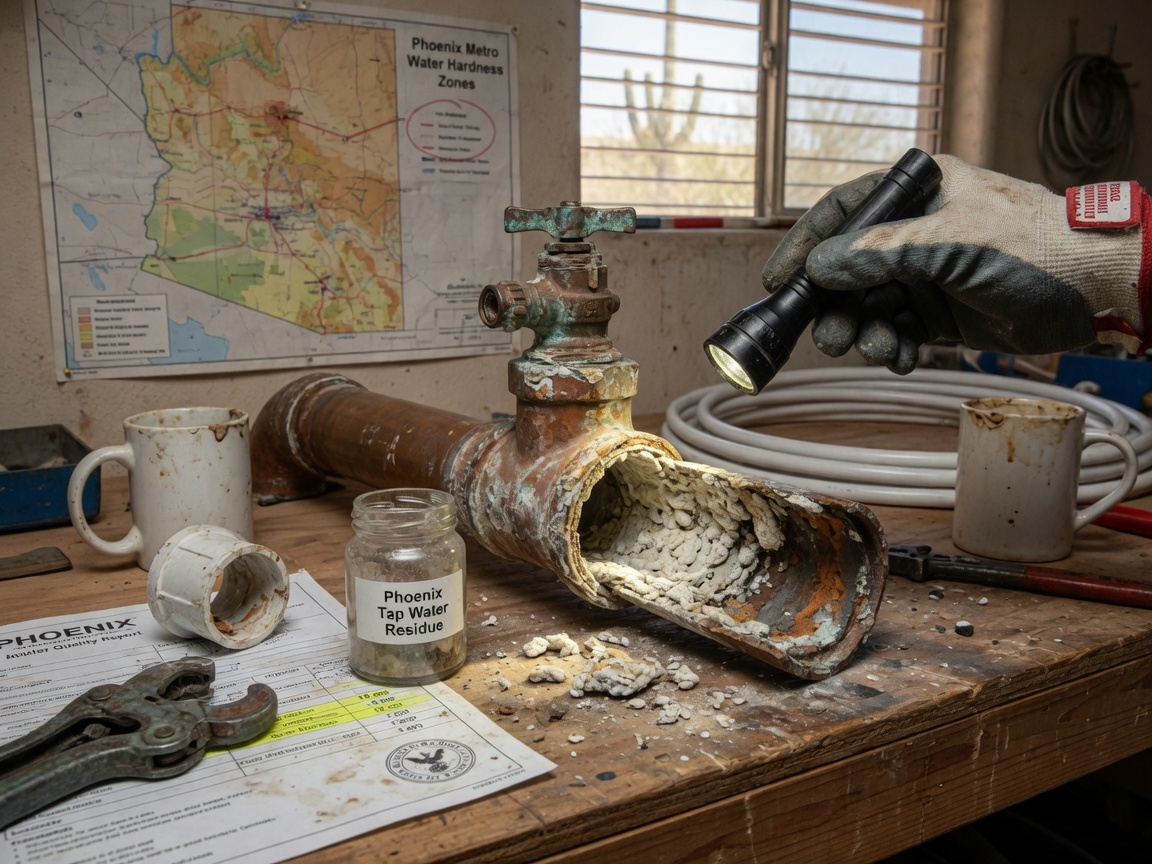
Phoenix hard water leaves behind calcium and magnesium deposits that coat pipes, fixtures, and appliances throughout Maricopa County homes. This buildup restricts flow, raises energy use, and shortens the life of water heaters and other equipment in neighborhoods from Arcadia to South Mountain.
Scale Buildup in Pipes and Fixtures
In Phoenix's hot desert climate, hard water minerals precipitate more readily once temperatures rise inside household lines. Homes built decades ago in Maryvale and Biltmore often have galvanized or copper piping that collects scale faster than newer PVC runs. Over time the deposits narrow the inside diameter, forcing pumps to work harder and creating low-flow spots at faucets and showerheads. Residents near Papago Park or the Phoenix Zoo notice white crust on aerators within months of installation. The same process affects older housing stock in Camelback East where summer heat pushes water temperatures higher and speeds crystallization. Regular inspection of accessible valves reveals the first layers before they reach critical thickness.
Effects on Water Heaters and Appliances
Tank-style water heaters in Phoenix homes suffer the heaviest impact from hard water because heat accelerates mineral separation. A typical 40-gallon unit can lose several gallons of effective capacity within a few years as sediment settles at the bottom. Electric elements become coated and overheat while gas burners must run longer to reach set temperatures. Homeowners in Tempe and Mesa who share the same aquifer report similar patterns, with units needing earlier replacement than manufacturer averages. Dishwashers and washing machines in Scottsdale-adjacent zip codes also show reduced performance when inlet screens clog with scale. Linking hard-water effects to emergency water heater repair helps residents recognize when temperature fluctuations or strange noises signal the need for professional flushing.
Pressure Loss and Leak Risks
Restricted pipe interiors from scale often produce the sudden pressure drops many Phoenix homeowners experience during peak summer demand. The same mineral layers can create pinhole leaks where corrosion concentrates around joints, especially in slab-on-grade construction common across 85018 and 85016. When leaks develop under concrete, water migrates along the slab and damages flooring or drywall before detection. Connecting this issue to what causes a sudden loss of water pressure in a Phoenix home gives readers a clear next step. In severe cases, slab leaks traced to long-term hard-water exposure require slab leak repair that involves rerouting lines or epoxy restoration to avoid full foundation work.
Practical Steps for Phoenix Homeowners
Flushing a water heater every six to twelve months removes loose sediment before it hardens. Installing a whole-house water softener at the main line protects new fixtures in Ahwatukee or Desert Botanical Garden-adjacent properties. Checking aerators monthly and cleaning them with vinegar dissolves early scale without chemicals that could harm older pipes. When pressure drops persist despite these steps, or when discolored water appears, contacting 24/7 emergency response prevents minor buildup from becoming a burst line. Monitoring utility bills for unexplained increases in water or energy use also flags scale-related inefficiency early in homes across Maricopa County.